

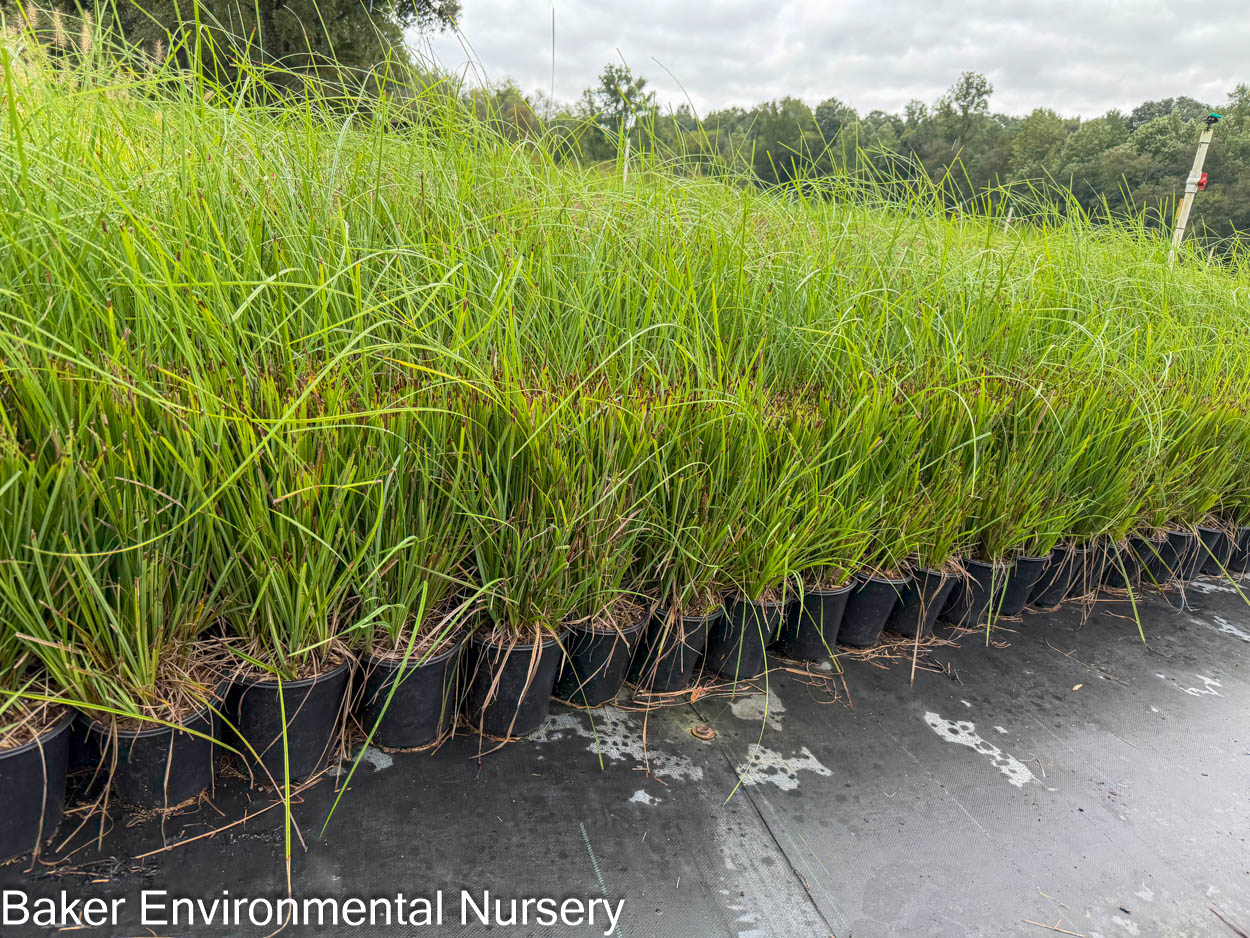
Carex stricta wholesale orders are what turn a difficult, wet, half-forgotten corner of a project into one of its strongest assets, and tussock sedge is the native sedge that makes those orders worth placing in volume. Every commercial landscaping team has a list of sites that behave badly: the low spot behind a parking lot, the detention basin that never quite dries out, the pond edge that keeps slumping, the swale that looks like bare mud after a hard rain. Those are the sites where a buyer stops shopping for color and starts shopping for survival.
Tussock sedge is built for exactly that job. It is a hardy native, grass-like perennial that thrives in wet soils and forms striking clumps of upright foliage instead of sulking through the wet season. That combination of tolerance and presence is why Baker Environmental Nursery grows it as part of a wholesale native sedge and wetland plant program aimed at contractors, municipalities, and green-industry professionals who need plant material to perform, not merely arrive.
If your planting plans keep running into high soil moisture, this is the plant that stops the argument. Place the order, plant it with confidence, and let the sedge tell the story for the next several seasons.
Why Wet Sites Fail Before They Ever Get Planted
Most planting failures on wet ground are decided long before anyone pulls a shovel out of the truck. A design calls for a familiar ornamental, the site holds water longer than the plan assumed, roots suffocate, and by the second season the bed is a scatter of gaps. The fix is not more irrigation or more mulch. The fix is a native plant that evolved with saturated ground.
Carex stricta is listed as growing in high soil moisture with full sun exposure, and its native environment is described as stream edge and wetland. That is not a plant tolerating wet ground at the edge of its comfort zone. That is a plant sitting in the middle of it. When a specification writer reaches for a sedge for a stormwater feature, a rain garden, or a wet meadow edge, tussock sedge already belongs there.
For wholesale buyers, that means fewer callbacks and fewer replacement cycles. A plant that survives its first winter on a marginal site saves an entire line item on the next budget conversation.
What Tussock Sedge Looks Like Once It Is In the Ground
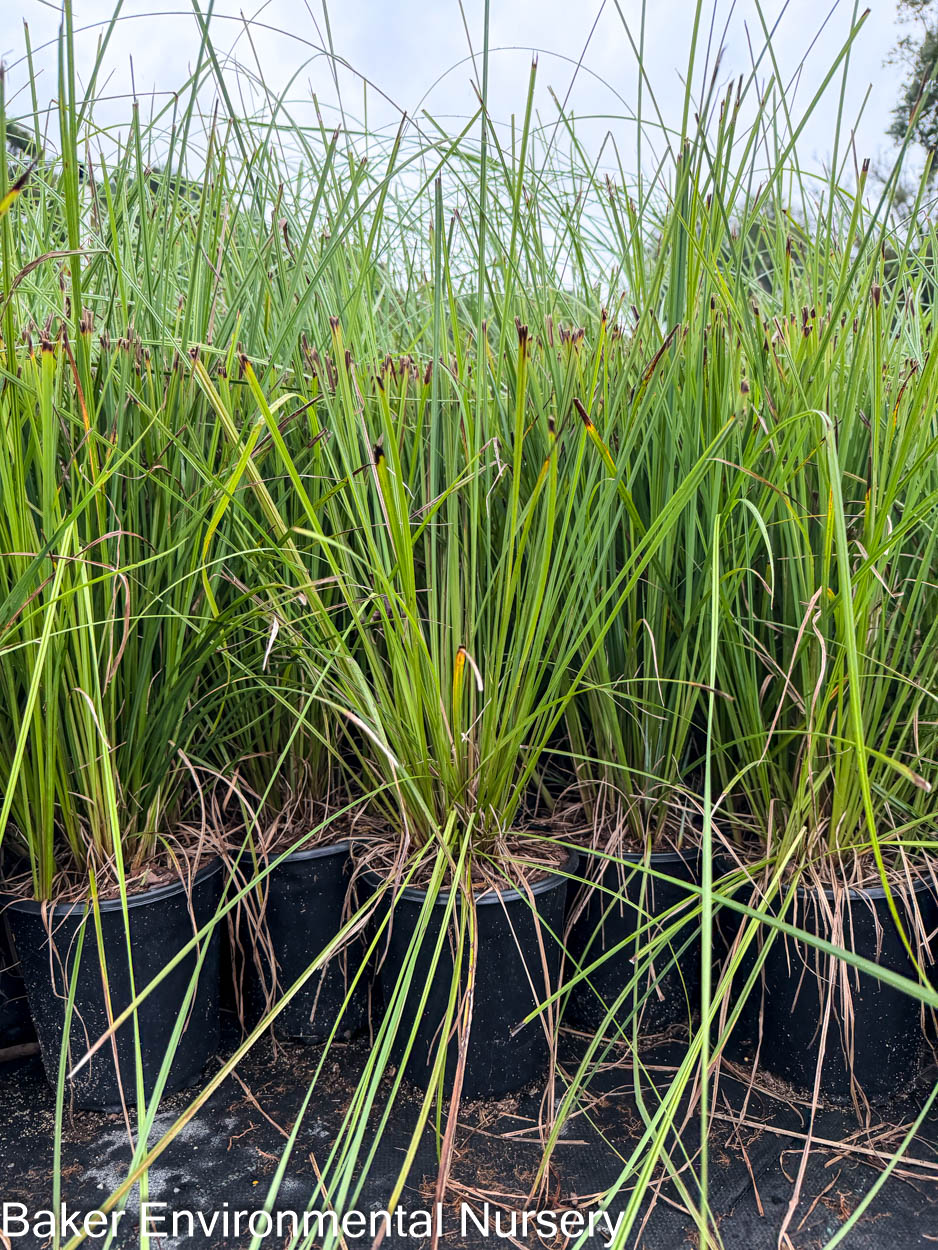
Tussock sedge is often described as an elegant, impressive sedge, and the description holds up in a mature planting. It can grow up to four feet tall and as much across, with gracefully arching, fine-textured leaves that give it a soft, almost fountain-like silhouette rather than the stiff, upright look of a mowed turf grass.
The foliage is green through its main season of interest, and the plant produces reddish-brown flowers during its bloom window in May and June. Bloom is not the point with this sedge, though it does add a quiet detail for anyone walking a site in late spring. The point is structure.
Clump-forming sedges hold their shape. They do not run across a bed and appear somewhere unexpected three years later. For commercial landscaping, that predictable habit is a feature, because it means the planting plan you sold is the planting plan that gets installed and the one that gets delivered.
The Visual Case for a Native Sedge in Commercial Landscaping
Native plants still get sorted into two boxes by some clients: the pretty ones and the functional ones. Tussock sedge refuses the sorting. Its fine texture reads well against broadleaf perennials, its upright clumps create rhythm along a waterline, and its massed form gives a designed edge to features that would otherwise look like unfinished grading.
Around the edge of a pond or stream, it softens the transition between water and land. In a rain garden, it fills the basin with something that looks intentional rather than incidental. Along a swale, it turns a drainage function into a linear planting that photographs well and passes inspection. Landscape architects and designers who specify native sedge material get a plant with real design weight behind it, not a placeholder.
Erosion Control That Comes From the Plant Itself
Tussock sedge has a knack for forming dense, rounded clumps that grow like little tussocks of grass, and those dense clumps are the reason it shows up on erosion control plant lists again and again. The root mass beneath a mature clump holds soil in place while the top growth slows water and breaks the energy of runoff moving across a slope or channel.
That makes it a natural fit for swales, for stream edges, and for moist to wet ground used as a ground cover where bare soil would otherwise be the default answer. Tussock sedge will not replace engineered structures, and it is not sold as a substitute for them, but it is the living layer that keeps a slope looking finished while the infrastructure does its job.
For contractors working on green infrastructure and stormwater management projects, plant material that contributes to stability is worth more than plant material that simply fills square footage. Buyers who understand that distinction are the buyers this sedge was grown for.
Wildlife Value That Helps Justify Native Plant Sales
Tussock sedge is consistently described as wildlife-friendly, and dense clumps do real work for the creatures that share a site. Cover at ground level matters, especially in landscapes that are otherwise open lawn, pavement, and mulch. A clump-forming sedge gives that cover without spreading into areas where it was never planned.
That matters commercially, not just ecologically. Municipalities, public agencies, and developers are asked more often to justify native planting on the grounds of habitat and biodiversity, and a wetland plant that supports wildlife while holding a wet slope together answers both questions at once. Wholesale plant sales move faster when the plant has more than one reason to be on the plan.
Where Carex stricta Belongs on the Drawings
The list of appropriate placements is broad, which is part of the appeal for anyone buying in volume. Rain gardens sit at the top of it, followed closely by pond edges and stream banks, where the sedge’s tolerance for saturated ground is an obvious match. Swales and bioswales work well because the clumps tolerate periodic inundation and still look maintained.
Moist to wet ground cover is another use, particularly on sites where turf is impractical and bare soil is unacceptable. Wet meadow edges, stormwater basins, and low corners of commercial sites all fall inside the plant’s comfort range. Carex stricta planted in wet ground is not a compromise planting. It is the correct planting.
Contract Growing and Ready-to-Ship Material
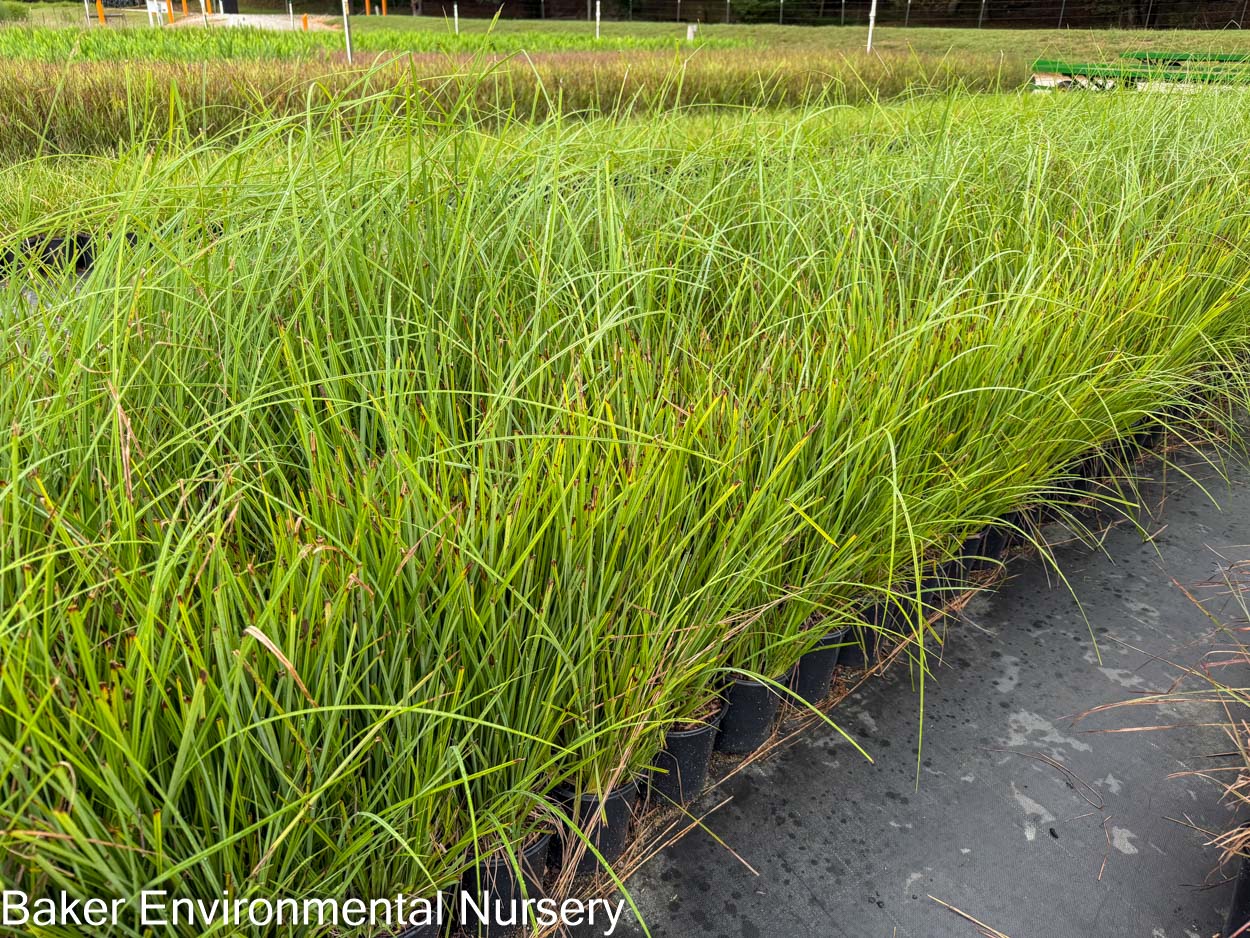
Baker Environmental Nursery is a wholesale-only grower of native grasses, sedges, perennials, rushes, and wetland plants, and the operation is set up for buyers who plan ahead. Contract growing lets a project specify the plant, the quantity, and the timing it needs, and the nursery produces the material to that specification rather than asking the schedule to bend around whatever happens to be sitting on the pad.
For buyers with tighter windows, ready-to-ship material keeps crews moving. A sod contractor who suddenly needs a wet corner planted, or a project manager whose planting window moved up by three weeks, does not want a conversation about next season. Those are the situations where having a wholesale sedge program on the other end of the phone is worth more than a lower unit cost somewhere else.
The catalog runs wide as well as deep, with roughly forty native grass and sedge products alongside native perennials and a substantial selection of rushes and wetland plants. A planting plan that mixes tussock sedge with companion wetland species can often be sourced in one order instead of four.
A Wholesale Nursery Built Around Large Landscaping Teams
Baker Environmental Nursery is Georgia-based and serves the Eastern and Midwestern United States, with a customer base that includes landscape contractors and installers, nursery suppliers and re-wholesalers, municipalities and local government agencies, landscape architects and specification writers, project managers and engineers working on green infrastructure and restoration, and commercial property managers running large sites.
That mix shapes how the material is grown and how orders are handled. Public agencies and DOTs need plants that tolerate heat and urban conditions. Contractors need counts that match the plan and delivery that matches the schedule. Re-wholesalers need consistency from one order to the next. A wholesale-only business lives or dies on those details, because it serves people who buy plants as inputs to a project rather than as a weekend purchase.
There is also a free plant calculator tool on the site for spacing and quantity estimates in both square and triangular planting patterns. For anyone sketching quantities for a wet meadow or a basin edge, that tool removes the guesswork that usually turns into either a shortage mid-install or a pallet left over at the end.
Why Carex stricta Wholesale Buyers Come Back
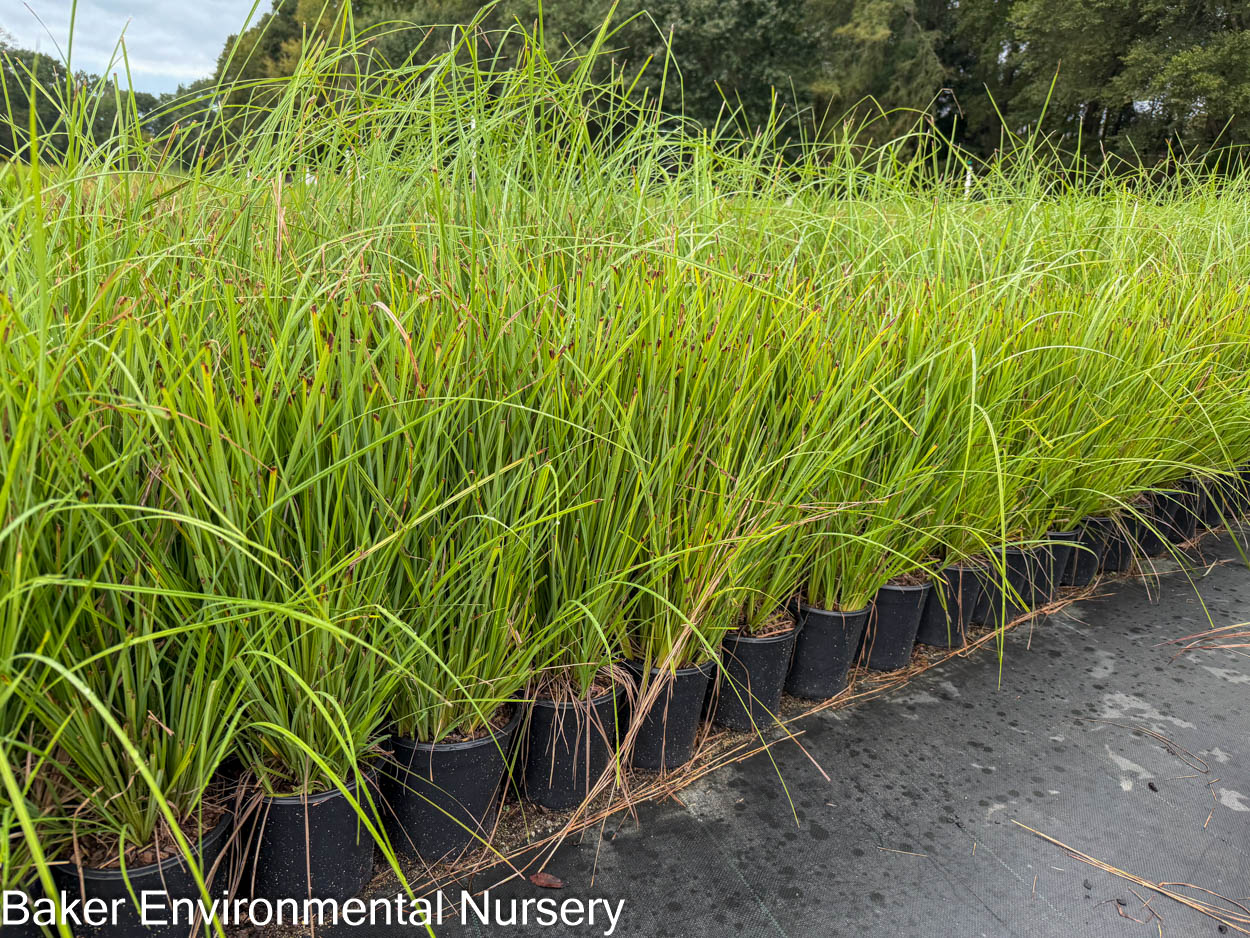
Tussock sedge is not a novelty plant, and that is exactly the point. It is a dependable native sedge with a proven role in wet ground, a clean clump-forming habit, real erosion control value, and wildlife benefits that help projects tell a complete story. It does not need a special maintenance regime to look right, and it does not need a sales pitch to a skeptical client who has watched other plants fail on the same wet corner.
When a contractor finds a plant that performs on the hard sites, the next order writes itself. The sedge goes in at the basin, it comes back green, the client stops asking questions about the wet spot, and the same material gets specified on the next project. That is the cycle a wholesale native sedge program is designed to support.
Placing a Carex stricta Wholesale Order
Orders run by phone and by email, so there is no self-service cart to fight with when you already know what you need. Baker Environmental Nursery is based in Hoschton, Georgia, and the customer service line is (706) 654-9072. Call with your quantities, your timing, and your site conditions, and the team can talk through whether Carex stricta should ship as ready material or be scheduled as a contract grow.
If you are planning a wet meadow, a pond edge, a rain garden, a swale, or a restoration planting, start the conversation early. Send over the plan, the counts, and the install window, and let the nursery match the production schedule to the project. Then call or email Baker Environmental Nursery at (706) 654-9072 or through the contact options on the website to lock in your tussock sedge order and get your plants growing.
Frequently Asked Questions
What is tussock sedge best used for?
Carex stricta is most often used in rain gardens, along pond edges and stream banks, in swales, and on moist to wet ground where a durable ground cover is needed. Its clump-forming habit and tolerance for saturated soil also make it a common choice for erosion control plantings and wetland restoration work on commercial and municipal sites.
Does Carex stricta need full sun?
Tussock sedge is listed for full sun exposure and high soil moisture, and its native environment is described as stream edge and wetland. That combination of open light and wet ground is where it performs best. Buyers placing large orders should confirm site conditions with the nursery before finalizing quantities and delivery timing.
How tall and wide does tussock sedge grow?
Carex stricta is described as growing up to about four feet tall and as much across, with gracefully arching, fine-textured leaves. The clump-forming habit keeps it in place rather than spreading aggressively through a bed. Bloom occurs in May and June with reddish-brown flowers, while the main season of interest is the green foliage.
Why is tussock sedge good for erosion control?
The plant forms dense, rounded clumps that grow like small tussocks, and those dense clumps help hold soil while the top growth slows moving water. That makes Carex stricta useful in swales, along stream and pond edges, and on wet slopes. It supports engineered solutions rather than replacing them, which is how it should be specified.
How do I place a Carex stricta wholesale order?
Baker Environmental Nursery is a wholesale-only grower, and orders are handled by phone and email rather than through a shopping cart. Call (706) 654-9072 or reach out through the website with your plant counts, project timing, and site conditions. Contract growing and ready-to-ship options are both available, so call or email today to start your tussock sedge order.