

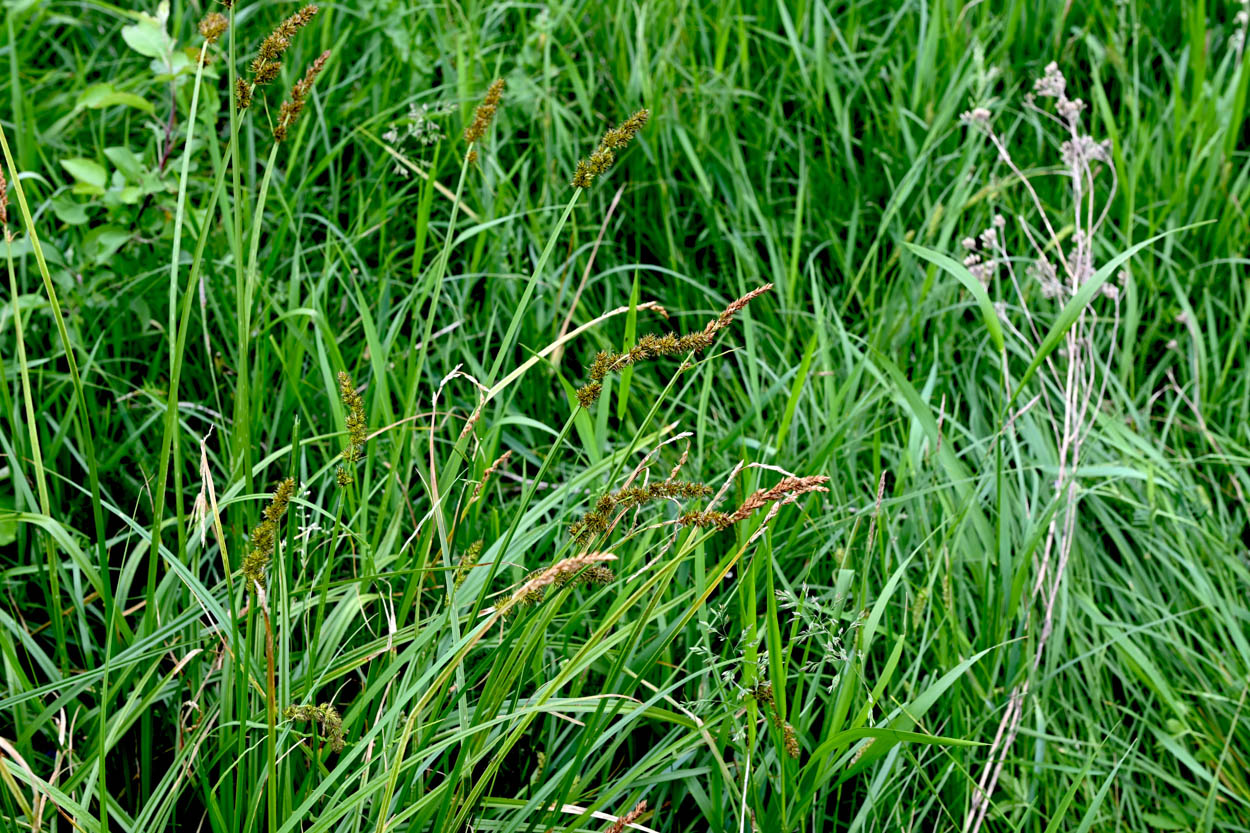
Carex vulpinoidea wholesale orders are how landscape contractors, restoration crews, and municipal buyers get a proven native sedge into ground that stays wet. Fox Sedge handles some of the toughest planting situations on a commercial or restoration site, and it keeps working long after the punch list is closed. Baker Environmental Nursery grows Carex vulpinoidea for the wholesale trade and supplies contractors, designers, municipalities, and re-wholesalers who need real quantities and a plant that performs where turf fails.
Wet ground is expensive to manage. Water sits, mowers sink, mulch floats, and the eroded edges of a basin or swale turn into a maintenance line item that never goes away. A native sedge that thrives in full sun and naturalizes in moist areas changes that math. It fills in, holds its place, and asks for very little once it is rooted. Buyers who need that outcome across acres do not need a rare plant. They need a tough one that can be grown in volume and delivered on schedule.
Fox Sedge has that reputation for good reason. It is described as a tough, versatile plant that lends itself well to most wetland restoration projects, and it is one of the most abundant sedges in Missouri, growing on moist open ground in swamps, wet prairies, and near water. Abundance in the wild is a strong signal for anyone placing a Carex vulpinoidea wholesale order. It means the plant is not delicate, not difficult, and not likely to sulk after installation.
Carex vulpinoidea Wholesale Solves the Problem Sites Nobody Wants to Plant
Every project has ground that fights back. The low corner where water stands for two days after a storm. The swale between a parking lot and a sidewalk. The gentle slope into a basin that erodes a little more each season. Those areas are usually the last to be planted and the first to generate complaints, because the standard answer, turf, does not survive there.
A Carex vulpinoidea wholesale order puts a wetland plant into that ground before it becomes a problem. Fox Sedge belongs in the places where water collects rather than passes through, and it holds those edges with fine textured foliage that looks intentional instead of weedy. Rain gardens, bioswales, stormwater facilities, retention and detention areas, wet roadside ditches, and the damp margins around ponds and swamps are all realistic applications for this species.
What a buyer is really purchasing, beyond plants, is fewer callbacks. Material that establishes without irrigation babysitting. Cover that reads as designed rather than temporary. For contractors carrying warranty periods and for municipalities answering to residents, that difference shows up on the budget line quickly.
Why Fox Sedge Fits Wet-Site Plans So Well
Site adaptability is where this species separates itself from fussier native plants. Carex vulpinoidea is widely distributed in North America and turns up in wet roadside ditches and fields, often in disturbed ground that sees full sun and fluctuating water levels. A sedge that volunteers in a ditch is not going to need coddling in a bioswale.
It thrives in full sun and naturalizes readily in moist areas. The species is variable in the wild, and that variability is part of its resilience, because it adapts across a wide range of wet conditions instead of demanding one narrow set of them. For a landscape architect writing a specification or a project manager sequencing installation windows, that flexibility removes risk from the planting plan.
Fox Sedge also answers to several common names, including American fox sedge, brown fox sedge, and common fox sedge, so a specification written with an alternate name is still pointing at the same plant. Baker Environmental Nursery can confirm naming and matching for spec writers who need the correct material under the correct label.
What Fox Sedge Looks Like Once It Settles In
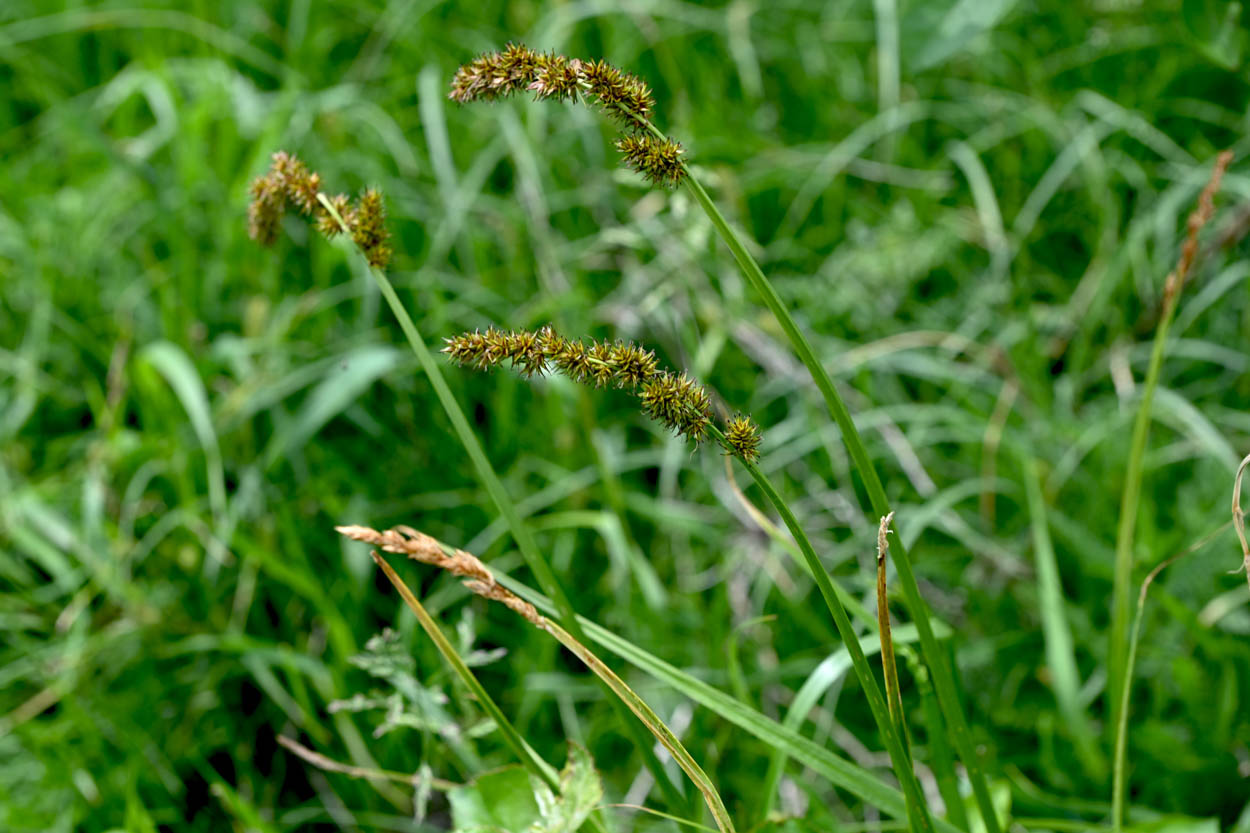
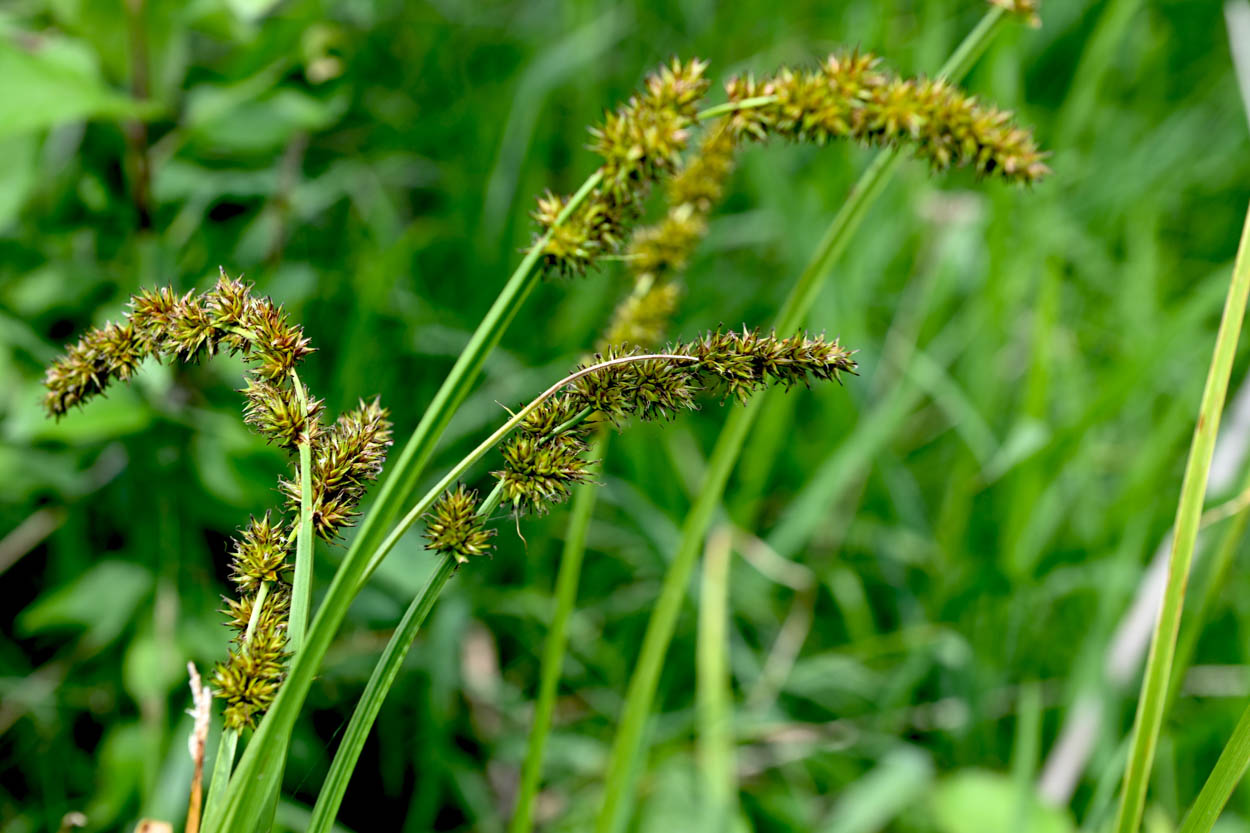
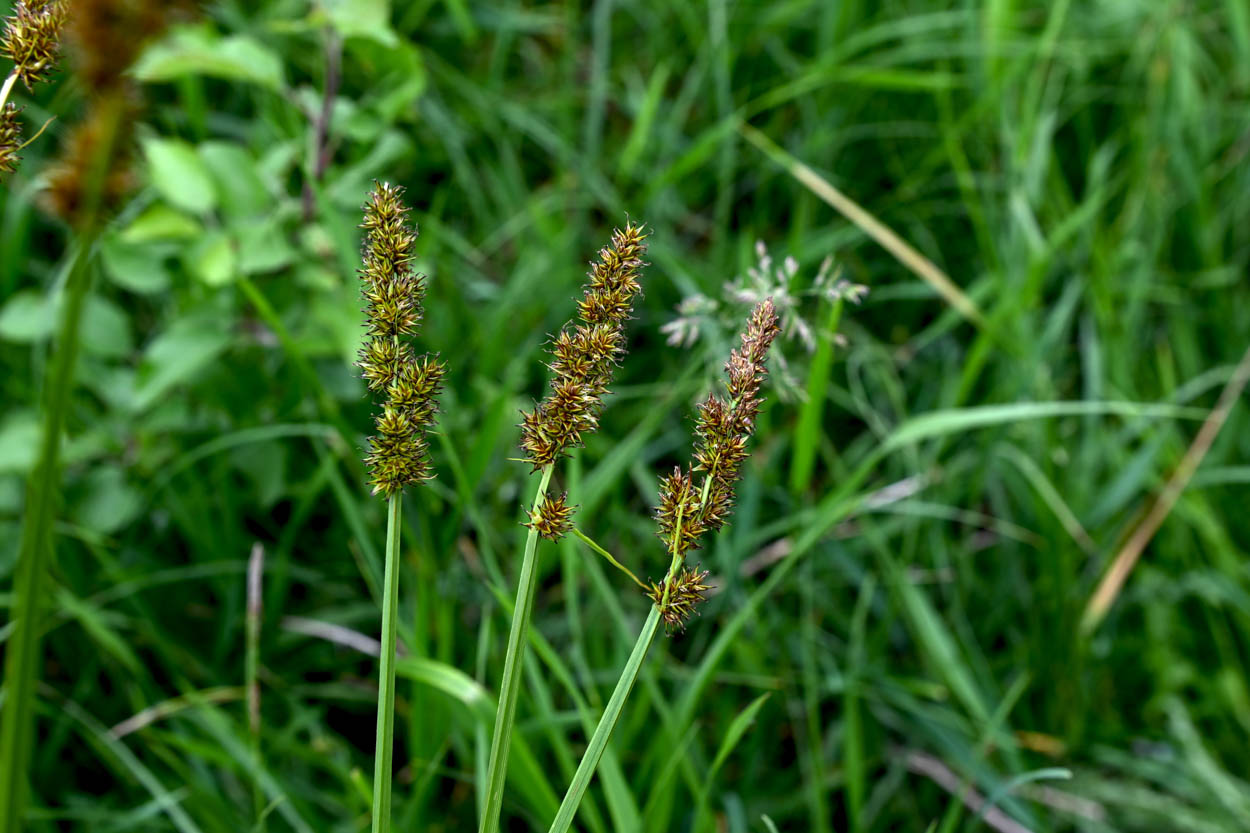
Fox Sedge is named for its seed head, which carries the shape of a fox tail. That one detail gives the plant an identity in the landscape that most wet-site groundcovers never achieve, and it is a big reason designers keep returning to it for native planting plans.
The foliage is fine textured and arching, forming attractive clumps with gracefully arching stems and a shapely form. In the trade it is often described as an herbaceous evergreen perennial with a delicate texture that stands out against coarser grasses and broadleaf perennials. Height typically lands between one and two feet, with some references noting plants that approach three feet tall, and a similar spread. Flowers arrive in July in green and brown tones.
Like other plants in the genus Carex, it grows with triangular stems and linear, strap-shaped leaves, and it roots with a fibrous system rather than a single deep taproot. Those fibrous roots are what knit wet soil together instead of sitting loose in it, which matters at the water line of a basin where flow concentrates and soil wants to move.
Rain Gardens, Bioswales, and Stormwater Facilities
Stormwater work is where Fox Sedge earns its keep at scale. A rain garden or bioswale is engineered to slow water and let it infiltrate, and the planting has to tolerate both the flood and the dry spell that follows. Carex vulpinoidea wholesale quantities make it practical to plant these features densely enough to actually function.
Fine textured arching clumps work in mass plantings along a swale bottom, up the side slopes, and around outlet structures where flow gathers. In retention and detention areas, the plant handles the wet and dry cycle that kills conventional landscape material, and its fibrous root mass helps hold the soil at the water line.
Municipal stormwater facilities often sit in public view, beside trails, parking lots, and roadways, so appearance matters as much as performance. A sedge that naturalizes readily into a soft, even stand gives those facilities a finished look while doing the ecological work the design intended.
Wetland Restoration and Native Planting Projects
Restoration work is a volume business. A wetland restoration project may call for thousands of plugs across acres of saturated ground, and the species list has to be built from plants that will survive both the site conditions and the competition around them.
Fox Sedge is a natural fit for that list. It is a native sedge of North America, one of the most abundant sedges in Missouri, and it grows on moist open ground in swamps, wet prairies, and near water. Restoration crews use it because it establishes in wet ground, spreads into open space, and behaves like a plant that belongs there, because it does.
On native planting projects with a habitat or diversity component, Fox Sedge adds structure at the low end of the planting palette where taller grasses and broadleaf perennials leave gaps. That layered result is what restoration professionals are trying to achieve, and it is much easier to reach when a reliable native sedge is available in quantity from a wholesale nursery that grows it on purpose.
Commercial Landscaping and Municipal Programs
Commercial landscaping clients judge a site by how it looks, and their facility managers judge it by what it costs to keep. Wet areas at office parks, campuses, retail centers, and industrial sites tend to be both the most visible problem and the most neglected part of the grounds.
Specifying a native sedge in those zones cuts mowing, cuts mulch replacement, and cuts the erosion that sends sediment into the drainage system. Developers and general contractors working through a green infrastructure requirement get a plant that supports stormwater performance while looking deliberate rather than improvised.
Municipalities and agencies face the same math with public scrutiny attached. A stand of Fox Sedge around a detention basin reads better than bare mud and cracked concrete, and it continues to perform as a wetland plant as the facility matures. Baker Environmental Nursery supplies these buyers because the nursery understands how public projects are bid, staged, and inspected, and because the material is grown for installation rather than for a retail bench.
Ready to Ship or Grown to Contract
Baker Environmental Nursery serves wholesale buyers two ways, and many projects end up using both. Ready-to-ship material is available for contractors working against an active installation schedule. When a planting window is open and trucks are already booked, plants that can leave the nursery on short notice keep crews productive and keep the project on the calendar.
Contract growing is the option for larger projects, phased installations, and future quantity requirements. Baker Environmental Nursery grows plants to specification so a restoration project delivered across multiple seasons receives consistent material at each stage, and so a property manager can lock in supply for a long build-out instead of re-bidding the planting package every year.
Both paths run through the same team, and both start with a conversation about quantity, timing, and site conditions. Buyers who know their numbers in advance get better scheduling, and the nursery’s plant calculator tool is available for estimating spacing and quantities across square or triangular planting patterns.
Carex vulpinoidea Wholesale Availability for Your Next Wet-Site Project
Availability shifts with the season, and the fastest way to plan around it is to call early. Whether a project needs a few hundred plugs for a rain garden or tens of thousands of plants for wetland restoration, Baker Environmental Nursery will confirm what is ready now and what can be scheduled into production for a later phase.
Pricing is quoted per project because quantity, timing, and delivery all shape the number. These are wholesale plants sold to the trade, so buyers should expect trade pricing and project-based quotes rather than retail rates. Contract growing quotes follow the same logic, with lead time built around the specification instead of a shelf.
If a site is unusual, heavily shaded, or wet in ways the drawing does not capture, say so up front. Baker Environmental Nursery would rather help a buyer choose the right native sedge than ship the wrong one, and that conversation about site conditions is part of what a working relationship with a wholesale nursery is supposed to provide.
Frequently Asked Questions
Is Fox Sedge aggressive once it is planted?
It naturalizes readily in moist areas with full sun, which means it spreads into open wet ground where nothing else is holding. On a restoration site or basin edge, that behavior is usually the goal. On a tightly designed planting bed where every inch is accounted for, discuss the site with Baker Environmental Nursery before ordering so the planting plan matches the plant.
Does Carex vulpinoidea prefer sun or shade?
It thrives in full sun and grows on moist open ground in swamps, wet prairies, and near water. Full sun with consistently wet soil is the sweet spot. Sites with heavy shade shift the picture, so buyers should describe the light conditions on the actual project and let the nursery confirm whether Fox Sedge is the right native sedge for that location.
Is Fox Sedge invasive?
No. Carex vulpinoidea is a North American native plant that is widely distributed and frequently found in wet roadside ditches and fields, so it is a natural part of wet ground rather than an introduced species. It does self sow in moist disturbed soil, which is why restoration professionals value it for wetland restoration and native planting projects.
How tall does Fox Sedge get, and when does it bloom?
Plants typically stand between one and two feet tall with a similar spread, though some references note heights approaching three feet. Flowers appear in July in green and brown tones, followed by the fox tail shaped seed head that gives the plant its name. The arching, fine textured foliage stays attractive through the season.
How do I check current Carex vulpinoidea wholesale availability?
Call or email Baker Environmental Nursery with your project quantities, target install dates, and site conditions. The team will confirm ready-to-ship material for active schedules and outline contract growing options for larger, phased, or future requirements. Wholesale pricing, availability, and production lead times are quoted per project, so the more detail you bring, the faster the answer comes back.