

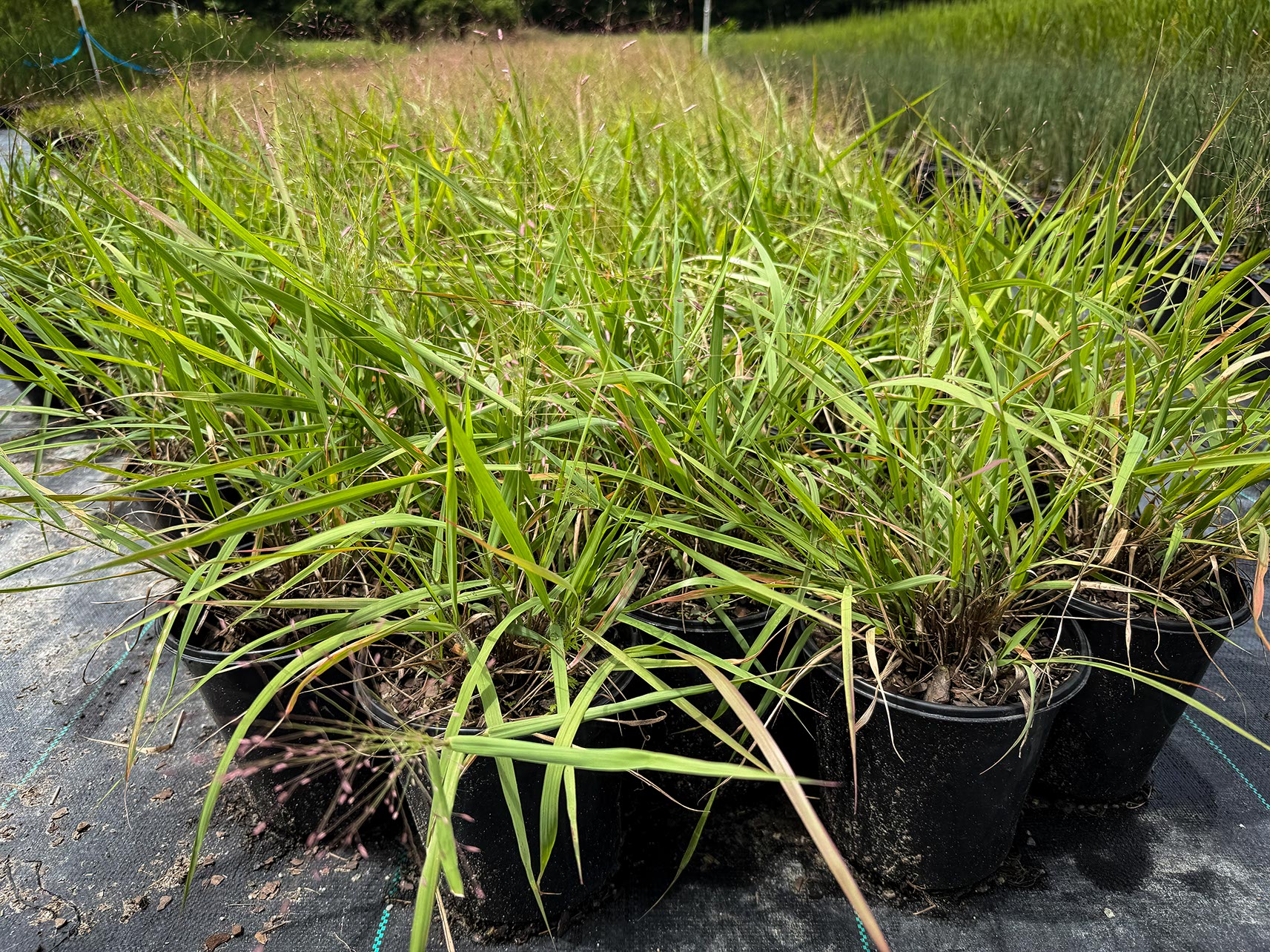
Eragrostis spectabilis, commonly known as Purple Lovegrass, is a warm-season bunchgrass native to a broad swath of the United States from Maine to Florida and west to Arizona and North Dakota. Its ornamental reddish-purple to bronzy-red inflorescence appears in mid to late summer, creating a striking haze of color in the landscape. For landscape contractors, municipalities, and green-industry professionals seeking low-maintenance, drought-tolerant options, Purple Lovegrass offers a reliable choice that thrives in challenging dry conditions.
Why Purple Lovegrass Belongs in Drought Tolerant Landscapes
Water restrictions and shifting climate patterns have made drought tolerance a critical factor in plant selection. Eragrostis spectabilis requires little water once established and performs well in dry, well-drained, sandy or gravelly soils. It is also listed among Piet Oudolf’s 100 Must-Have Plants, a testament to its value in designed landscapes. The grass spreads slowly by rhizomes and self-seeds, gradually filling gaps without becoming aggressive. This combination of drought resistance, low water needs, and manageable spread makes it a prime candidate for sustainable, low-input planting designs.
Key Characteristics of Purple Lovegrass
Growth Habit and Size
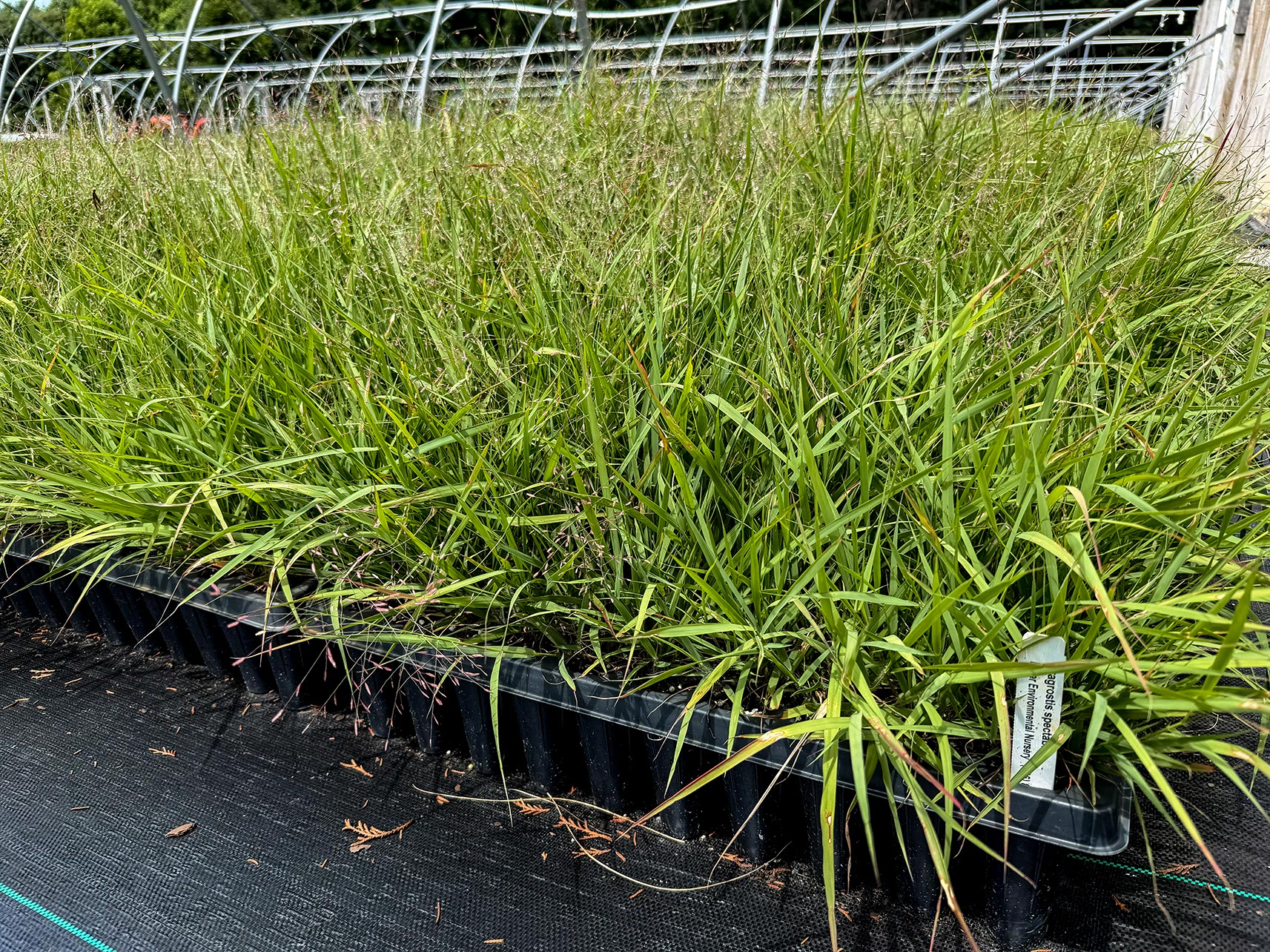
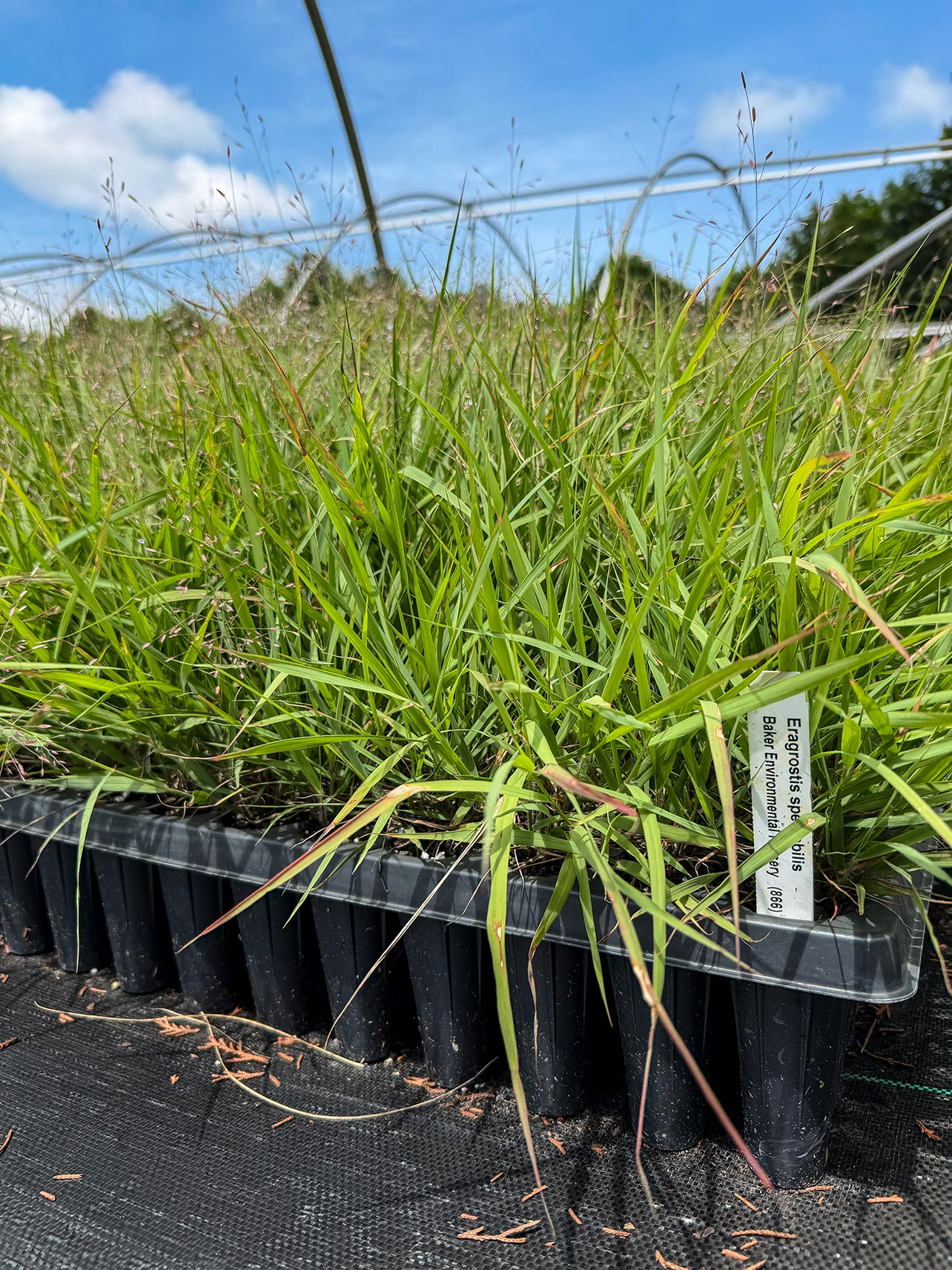
Purple Lovegrass is a warm-season bunchgrass that forms clumps of fine-textured foliage. Mature height varies among sources, a detail that buyers should keep in mind when specifying plants. Some sources report the foliage at 6 inches with the inflorescence pushing blooms to about 10 inches. Others describe the plant reaching 8 to 14 inches, while still others state 18 to 24 inches. The variation reflects differences in whether the measurement includes the flower stalks and local growing conditions. In general, expect a low-growing clump that sends up taller, airy flower heads in late summer. Spacing recommendations are limited, but one source suggests 12 inches between plants for mass plantings.
Bloom and Seasonal Interest
The inflorescence of Eragrostis spectabilis is its main ornamental feature. In mid to late summer, the grass produces a cloud of tiny flowers that can appear reddish-purple, rose-purple, or bronzy-red, depending on soil and clone. This hazy bloom effect softens the landscape and pairs well with other native perennials and grasses. The dried seed heads persist into fall and winter, providing subtle texture and some wildlife value. Foliage should be cut to the ground in early spring before new growth begins.
Hardiness Zones
Purple Lovegrass is reported across a wide range of USDA hardiness zones, though individual sources disagree on the exact endpoints. The widest reported range spans zones 3 to 11, while other sources list 3-8, 4-10, 4-11, or 6-10. This discrepancy means that landscape professionals should verify performance in their specific region using local extension resources or proven experience. In general, the grass prefers the warmer end of its range but has shown adaptability to cooler climates as well.
Growing Conditions for Best Performance
Sunlight and Soil
Full sun is consistently recommended for the best flowering and overall health. Most sources caution that part shade can reduce bloom density and increase floppiness. The plant thrives in dry to average, well-drained soils, particularly sandy or gravelly types. It performs poorly in rich, moist soils with poor drainage. This preference for lean conditions makes it an ideal candidate for hellstrips, roadsides, rain garden berms, and other tough urban sites where soil quality is low. Purple Lovegrass can also grow near black walnut trees, an advantage for landscapes constrained by juglone toxicity.
Water and Fertility Needs
Once established, Eragrostis spectabilis requires little supplemental water and no fertilizer in sustainable landscapes. This aligns with the goals of low-maintenance and ecologically responsible design. Overwatering or overfertilizing can lead to weak growth and reduced drought tolerance. The grass is also noted for some salt tolerance, broadening its suitability for roadsides and coastal applications. Specific watering frequency is not detailed in available sources, but the general rule for established plants is to water only during prolonged dry periods if at all.
Landscape Applications for Purple Lovegrass
Meadows and Mass Plantings
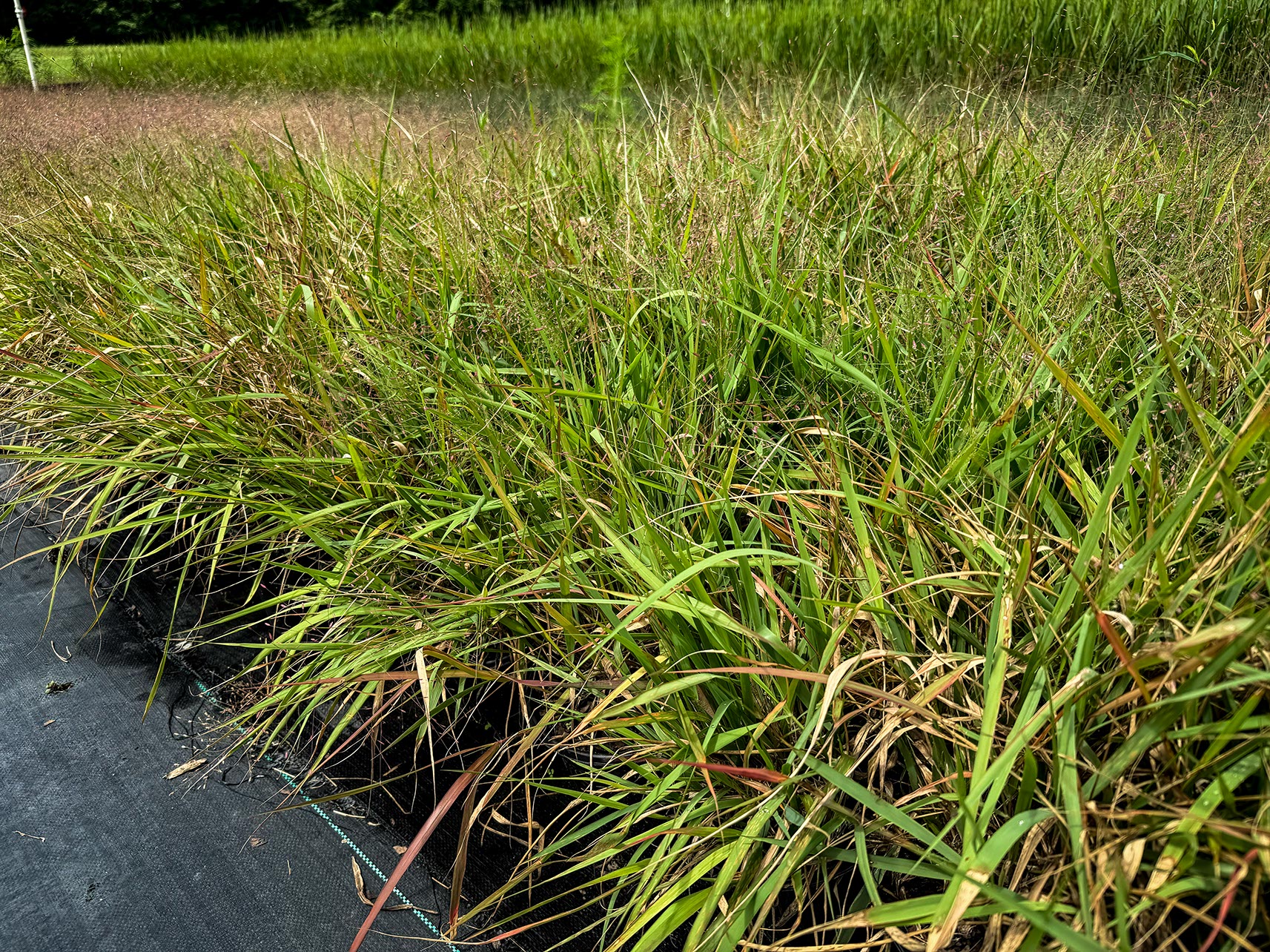
The airy, hazy effect of Purple Lovegrass makes it a natural choice for meadow restorations and large-scale mass plantings. When planted in drifts, the combined bloom creates a purple-pink haze that moves in the wind. It pairs well with other drought-tolerant natives such as little bluestem, sideoats grama, and purple coneflower. For contractors working on ecological restoration, this grass provides erosion control on slopes and disturbed sites due to its slow-spreading rhizomes and self-seeding habit.
Borders and Groundcover
In residential and commercial borders, Purple Lovegrass fills the front or middle of the bed with fine texture. Its low-growing foliage forms an attractive groundcover that suppresses weeds once established. The self-seeding nature means that over time the planting will thicken, but it can be managed by mulching or mechanical removal of unwanted seedlings. For formal designs, spacing the plants at 12 inches ensures a solid matrix.
Lawn Alternatives and Hellstrips
For clients seeking to reduce turf area, Purple Lovegrass can be used as a lawn alternative in low-traffic zones. Its bunchgrass habit means it does not form a uniform sod, but a matrix of clumps that accept foot traffic occasionally. It is especially well-suited for hellstrips, the narrow planting strip between sidewalk and street, where soil is often dry and compacted. The grass’s drought tolerance, salt tolerance, and deer resistance make it a low-maintenance option for these difficult spaces.
Containers and Green Roofs
Purple Lovegrass can also serve as a filler plant in decorative containers, adding texture and seasonal color. Its shallow root system adapts to smaller volumes, and its drought tolerance reduces watering frequency. Additionally, it is suitable for green roof applications, where weight and water are limited. The grass’s ability to thrive in shallow, well-drained media makes it a practical choice for extensive green roof systems.
Maintenance and Care
The low-maintenance reputation of Eragrostis spectabilis is well earned. It requires no fertilizer and minimal water after establishment. The primary maintenance task is cutting the old foliage to the ground in early spring before new growth emerges. This tidy-up removes the previous year’s flower stalks and dead leaves and prevents thatch buildup. Some sources note that the plant can self-seed prolifically in favorable conditions, so monitoring for unwanted seedlings is advisable in formal gardens. In naturalized meadows, this self-seeding is often a desirable trait that increases cover over time.
Frequently Asked Questions
Is Purple Lovegrass truly drought tolerant?
Yes. Multiple sources confirm that Eragrostis spectabilis is drought tolerant once established. It thrives in dry, well-drained, sandy or gravelly soils and requires little supplemental water. Overwatering or planting in rich, moist soil leads to poor performance.
What is the mature height of Purple Lovegrass?
Reported heights vary by source and measurement method. Foliage alone may be 6 to 14 inches, while the inflorescence can reach 18 to 24 inches. The variation means it is best to observe local conditions or consult a knowledgeable supplier for expected size in your region.
Can Purple Lovegrass be used for erosion control?
Yes. The grass spreads slowly by rhizomes and self-seeds, helping to stabilize soil on slopes and disturbed sites. It is particularly useful on dry, sandy banks where other plants struggle to establish.
Does Purple Lovegrass require full sun?
Full sun is recommended for the best flowering and compact growth. Part shade may be tolerated, but bloom density will likely decrease and stems may become floppy. For consistent performance in commercial landscapes, full sun is the safest choice.
Is Purple Lovegrass deer resistant?
Yes. Both North Creek Nurseries and the Native Plant Trust list Eragrostis spectabilis as deer resistant. While no plant is completely immune, this grass is rarely browsed, making it a reliable option for sites with deer pressure.