

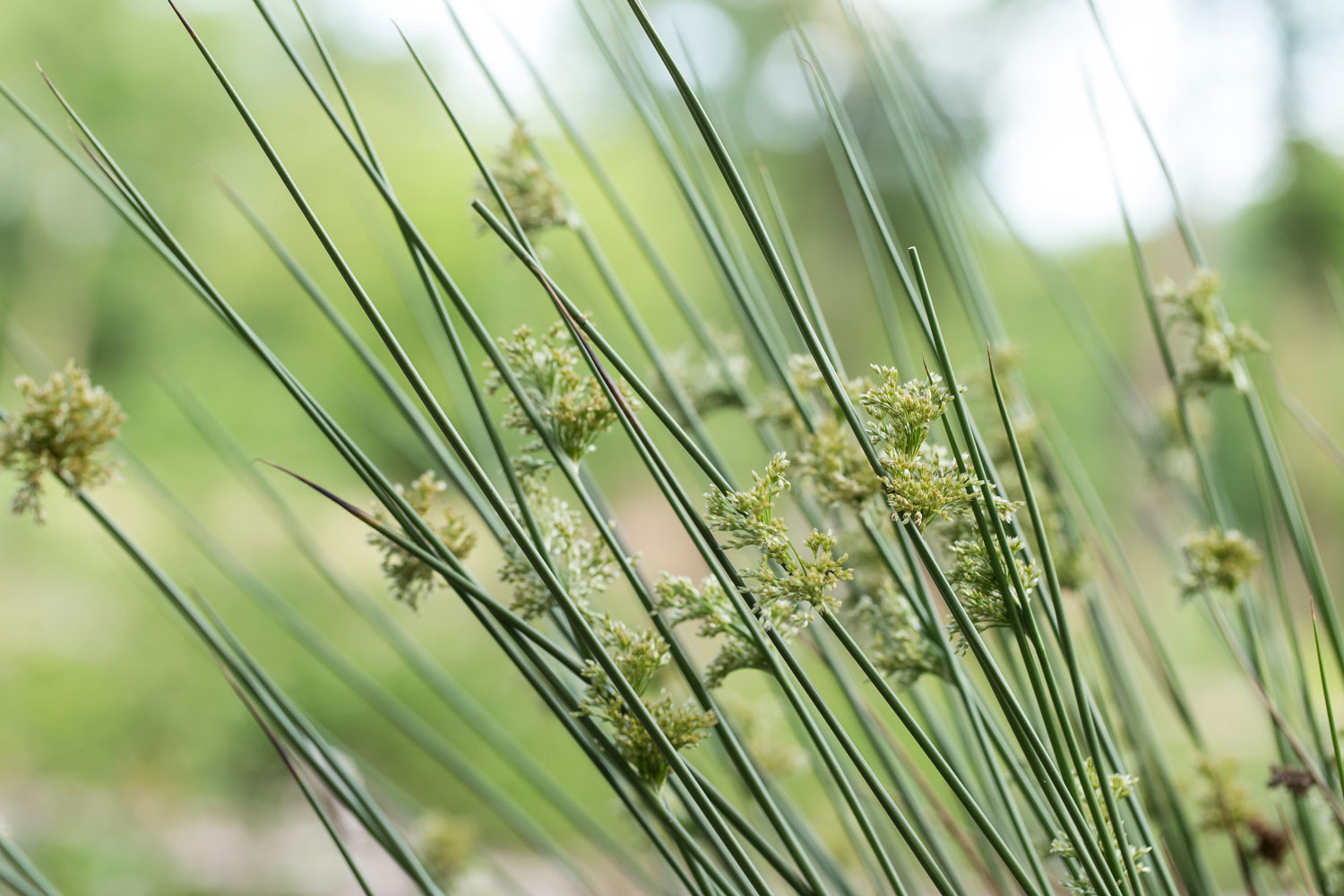
Juncus effusus, commonly known as Soft Rush or Common Rush, is one of the most widely specified emergent aquatic plants for stormwater management systems in the United States. Landscape contractors, municipal engineers, and restoration professionals turn to this clump-forming, rhizomatous perennial for its ability to handle fluctuating water levels, filter runoff, and stabilize soil along retention ponds, bioswales, and wet meadows. As a wholesale-only grower, Baker Environmental Nursery maintains ready-to-ship stock of Juncus effusus for large-scale commercial and municipal projects. This article covers the characteristics that make Soft Rush a workhorse in stormwater retention, where to plant it, and how to source it in volume for your next bid.
Why Juncus effusus Is a Top Choice for Stormwater Retention
Soft Rush earns its place in stormwater specifications because it thrives in the conditions that most plants cannot tolerate. It handles saturated soils, intermittent dry spells, and the fluctuating water levels typical of retention basins. Juncus effusus is recommended for rain gardens, bioswales, and the borders of retention ponds. Its dense root matrix binds soil and slows water velocity, which reduces erosion and promotes sediment accretion. The plant also contributes to nutrient uptake and can be used in wastewater treatment applications. For professionals designing or maintaining stormwater infrastructure, Soft Rush delivers reliable performance across a wide range of site conditions without demanding intensive maintenance.
Each shoot of Juncus effusus can produce up to 8,500 seeds per year, which supports natural regeneration in appropriate settings. The plant is also deer resistant, salt tolerant, and clay tolerant, making it suitable for roadside bioswales and urban retention basins where salt runoff and compacted soils are common challenges. Its cool-season growth habit means it greens up early in the spring and provides cover through the growing season, supporting both stormwater function and habitat value.
Key Features That Support Stormwater and Biofiltration
Dense Root Matrix for Bank Stabilization
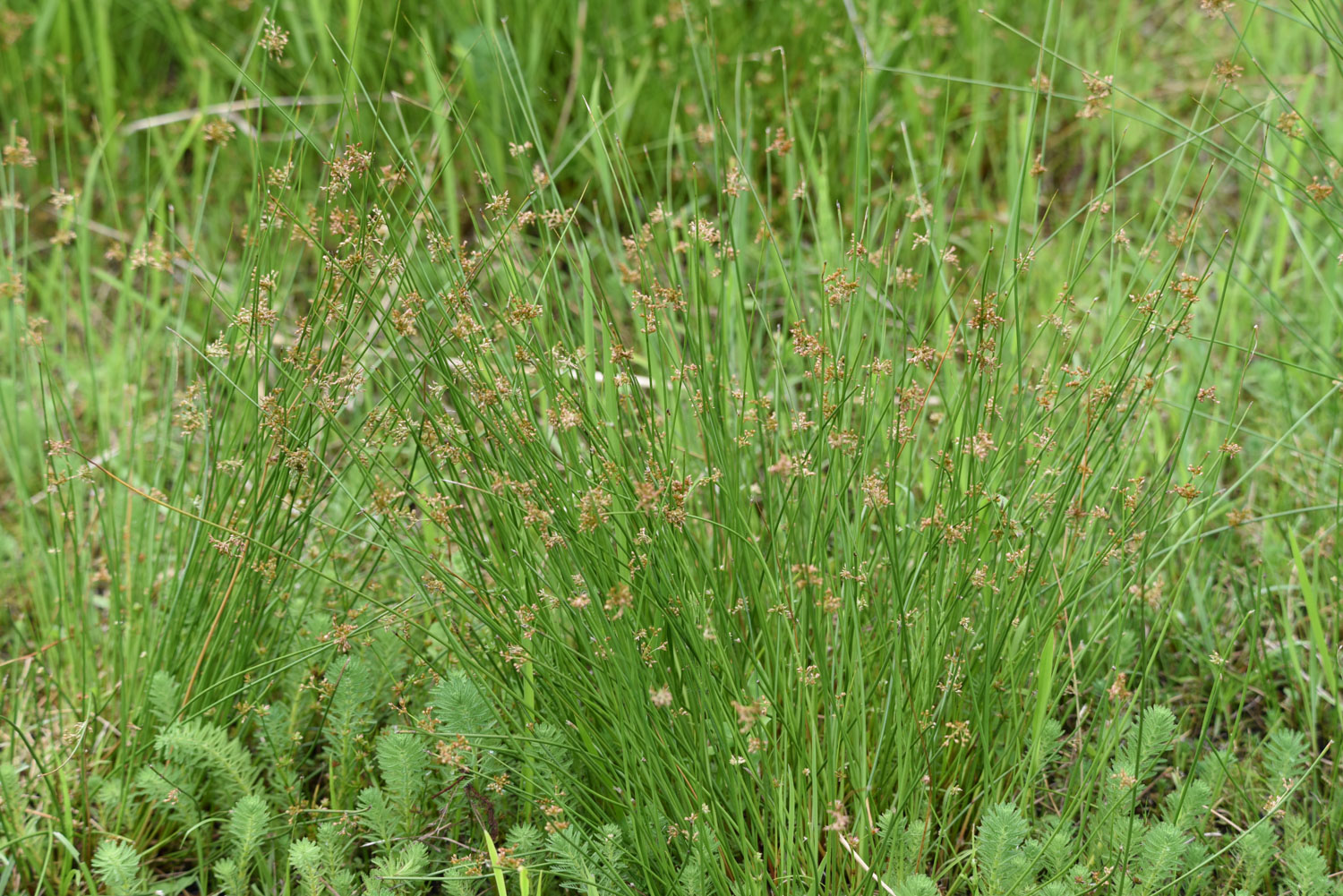
The root system of Juncus effusus is one of its most valuable assets for stormwater retention. The plant spreads by short rhizomes and seed, forming dense clumps that knit together over time. This root mass holds soil in place along pond edges and swale banks, preventing slumping and erosion during heavy rain events. The fibrous roots also create channels that help infiltrate water into the soil profile, supporting the biofiltration function of rain gardens and bioretention cells.
Standing Water and Fluctuating Moisture Tolerance
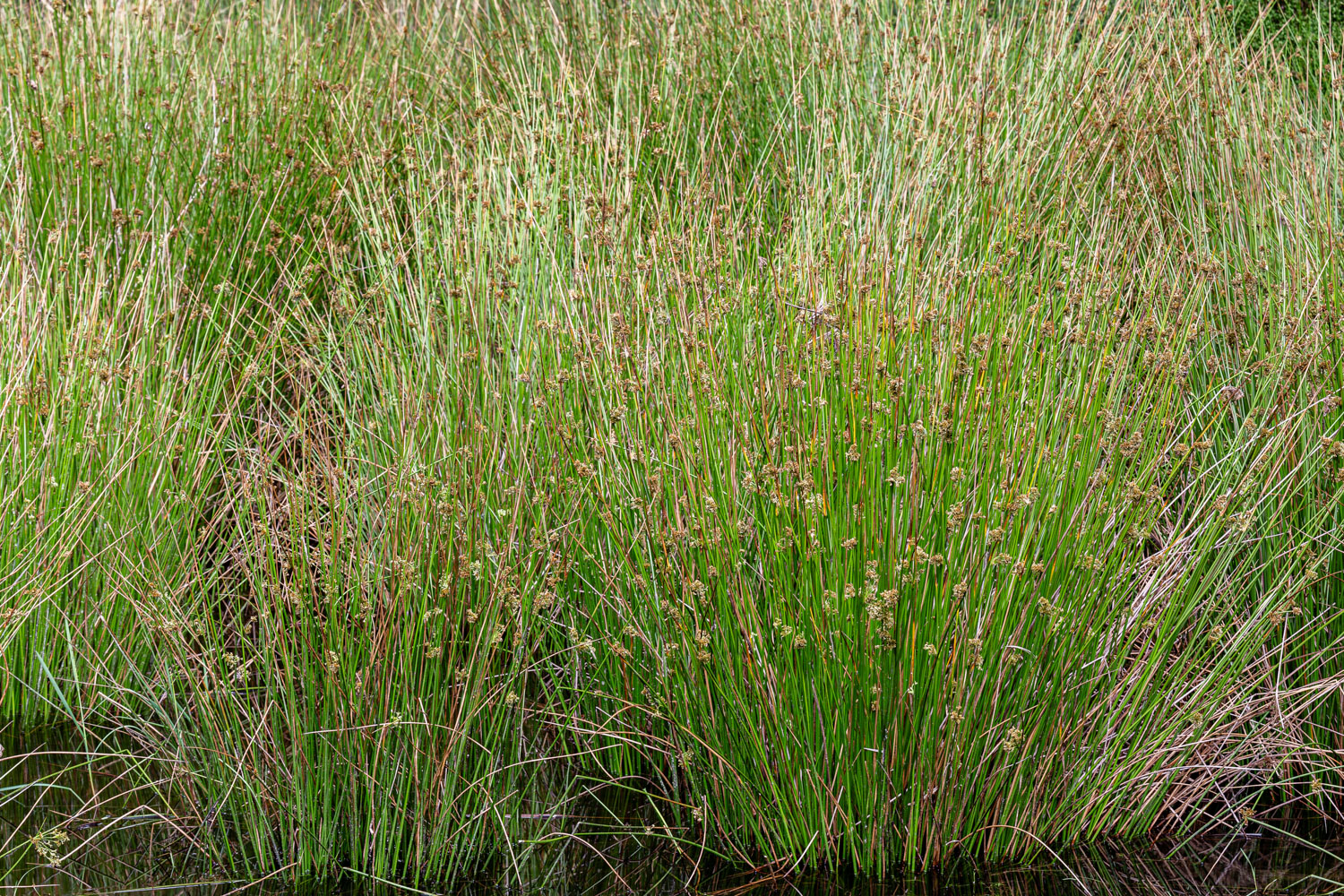
Soft Rush can be planted at the edge of a pond or in up to 6 inches of standing water. The plant also tolerates intermittent dry conditions and regular garden soil, meaning it survives the wet-dry cycles common in stormwater basins that fill during storms and drain between events. During the growing season, moderate summer watering 1 to 4 times per month is generally sufficient to keep plants healthy. This adaptability makes Juncus effusus one of the most flexible species in the emergent aquatic palette.
Nutrient Uptake and Water Filtration
Like most wetland plants, Soft Rush plays a role in removing excess nutrients from stormwater runoff. Its fibrous root system and rhizomes take up nitrogen and phosphorus that would otherwise contribute to algal blooms in receiving waters. While specific nutrient removal rates vary by site conditions, the USDA NRCS identifies Juncus effusus as valuable for nutrient uptake and wastewater treatment. For stormwater managers seeking low-cost, passive filtration, Soft Rush provides a natural solution that improves water quality as runoff moves through the system.
Where to Plant Soft Rush in Stormwater Systems
Juncus effusus performs best in full sun to partial shade and consistently moist to wet soils. It is well suited to the following stormwater applications:
- Retention pond borders – Plant along the shoreline in water up to 6 inches deep to stabilize banks and filter runoff before it enters the pond.
- Bioswales and rain gardens – Use Soft Rush in the lowest zone that collects and slowly infiltrates stormwater between rainfall events.
- Biofiltration cells – Incorporate into engineered filter beds where nutrient removal and sediment capture are primary goals.
- Wet meadow restorations – Establish large stands in seasonal wetlands that support both stormwater detention and wildlife habitat.
The plant reaches a mature height of 3 to 5 feet depending on site moisture and hardiness zone. Stems are stout but soft, 1.5 to 3 mm wide, and maintain an upright clump form that does not flop over in high winds. Spread is moderate via short rhizomes and seed, so plantings will fill in over time without overwhelming adjacent species in a well-planned design.
Sourcing Wholesale Juncus effusus for Your Next Project
Baker Environmental Nursery stocks Juncus effusus – Soft Rush as a core line in our wetland plant inventory. We grow our plants in professional nursery conditions to ensure strong root systems and uniform growth for large-scale installation. Our wholesale pricing is designed for landscape contractors, municipalities, and green-industry professionals buying in volume. We invite you to check our live inventory online to confirm current availability and quantities. For quotes on larger orders or upcoming bids, call or email our sales team. We understand the timelines and budget constraints commercial projects demand, and we work to get you the plants you need when you need them.
In addition to Soft Rush, Baker Environmental Nursery supplies a full range of native grasses, sedges, perennials, and wetland plants. We also offer a contract growing service that produces plants to your specifications for large-scale restoration and stormwater projects. Whether you need 500 plugs or 50,000, we can scale to meet your project requirements. Quality starts at the root, and every plant we ship is grown to perform in the field.
Frequently Asked Questions
How much standing water can Juncus effusus tolerate?
Soft Rush can be planted at the edge of a pond or in up to 6 inches of standing water. It also tolerates intermittent dry conditions, making it well suited to stormwater basins that flood and drain repeatedly. For consistently deeper water, consider other emergent species better adapted to prolonged submergence.
Does soft rush spread aggressively?
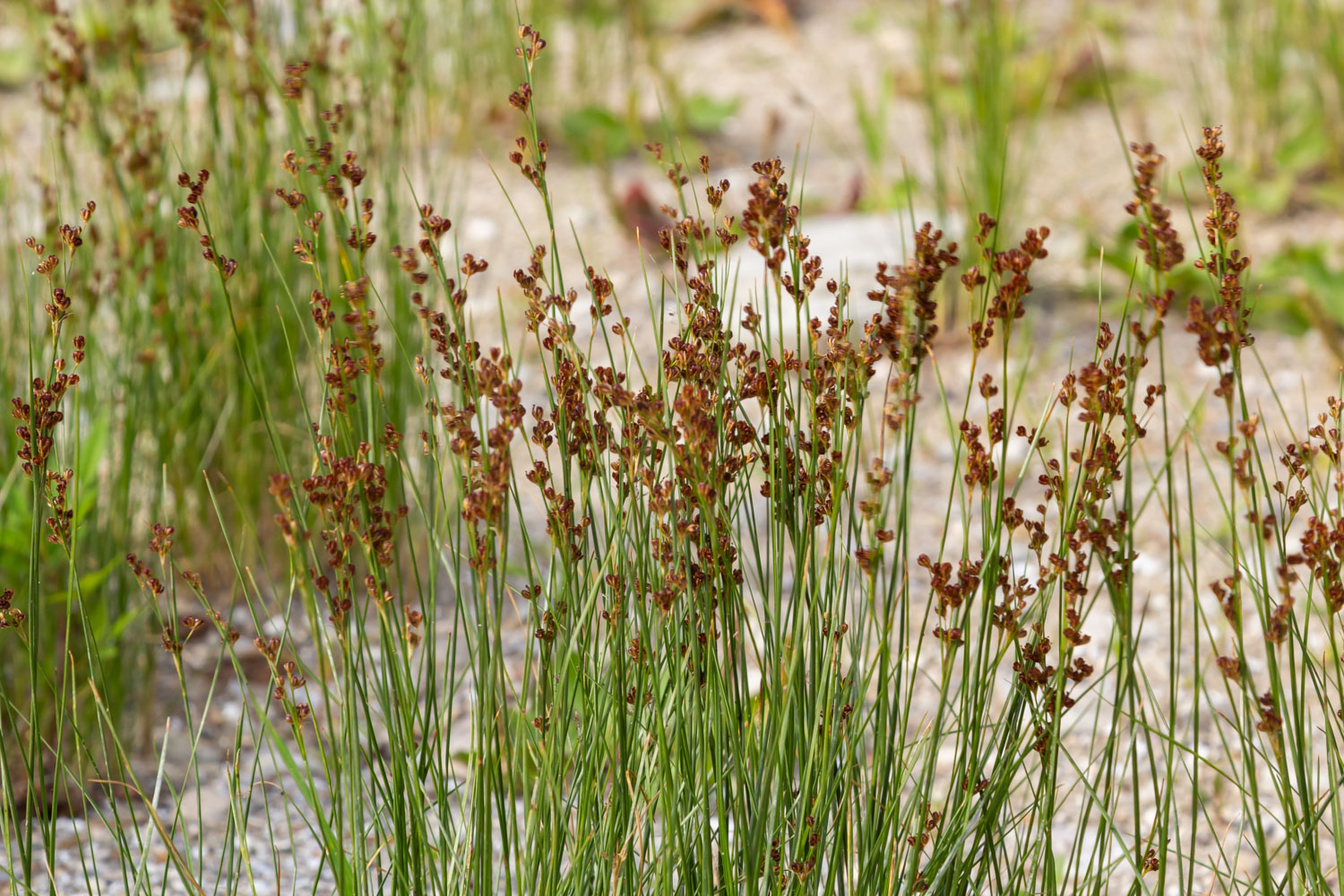
Juncus effusus spreads by short rhizomes and seed. Each shoot can produce up to 8,500 seeds per year, and the plant can have invasive characteristics in certain situations. In stormwater applications, regular monitoring and management may be needed to keep it within designed boundaries. Consult local guidelines for your region.
What hardiness zones work best for soft rush?
Soft Rush is broadly hardy across zones 4 to 9 based on nursery recommendations from commercial growers. Some sources extend the range from zone 2 through zone 10 depending on the variety. Always verify zone suitability for your specific site location before specifying large quantities.
Is soft rush a true grass?
No, Juncus effusus is not a true grass. It belongs to the Juncaceae family and is classified as a rush. While it has a grass-like appearance with upright, cylindrical stems, its botanical characteristics differ from true grasses. It is often grouped with grass-like plants in plant selection guides for wetland and stormwater design.